March 2026 · 4 min read
Speed is a strategy
A high-fidelity prototype has killed more bad ideas and unlocked more good ones than any meeting ever will. I build them not to look polished, but to make the hard conversations happen faster.
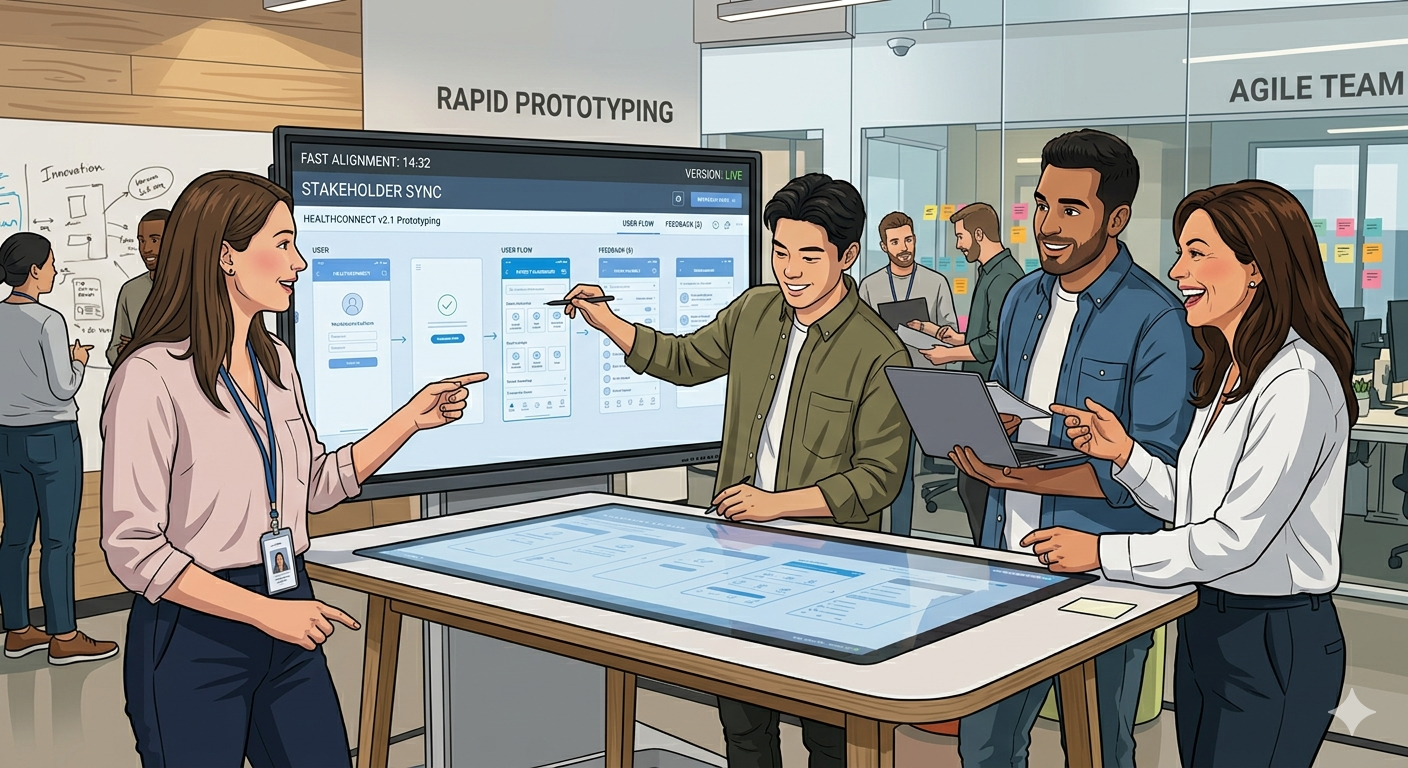
A high fidelity prototype has killed more bad ideas and unlocked more good ones than any meeting ever will. I build them not to look polished but to make the hard conversations happen faster.
Before a product sees the light of day, it has to survive something harder than the market. It has to survive internal alignment. Sales teams need to believe they can sell it. The machine learning team needs to trust the data model. Service leaders need to see how they will support it. And everyone is already forming opinions before a single line of code is even written.
This was exactly the challenge we faced with Task Intelligence, a product designed to show enterprise leaders how AI is reshaping work at the task level. It relied on a rich knowledge graph, a new taxonomy, and hundreds of thousands of data points mapped to occupations, skills, and automation exposure. It was genuinely powerful, but it was also genuinely impossible to explain in a slide deck to a room full of people who each had their own mental model of what a task even meant.
Everyone walks out of a meeting with their own version of the idea. A prototype gives them one version, a shared one.
So instead of booking another round of slides, I built a working prototype. It was not polished, but it was purposeful. It showed the taxonomy in action by mapping tasks to roles, color coding them by AI exposure, and making them filterable by function. It was something you could click through in three minutes and actually understand.
The shift in the room was immediate. Instead of debating whether the concept made sense, people started debating specifics: Why is this task coded that way? Can I filter by department? What does this look like for our existing tooling?
Those are the exact conversations that move things forward, and they happened in a single session instead of four.
The real job of an early prototype
The goal is not to impress anyone. The goal is to create a shared object, something concrete enough that disagreement becomes productive instead of circular. When people can point at something specific, alignment stops being a negotiation and starts being a design conversation.
Internal buy in is its own kind of product problem. Your stakeholders are smart, busy, and skeptical, which is not unlike the customers you are building for. You should treat the alignment process the same way you treat discovery. Make it tangible, make it fast, and let the reactions tell you what is actually true.
Speed is not the enemy of quality. Ambiguity is.